Harbor College students are using the latest tools thanks to the facility's emphasis on digital technology.
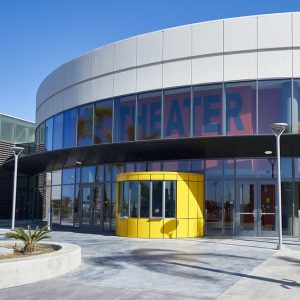
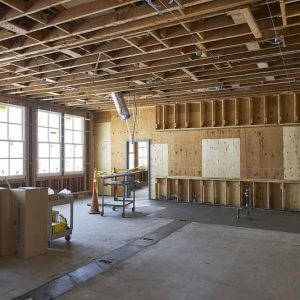
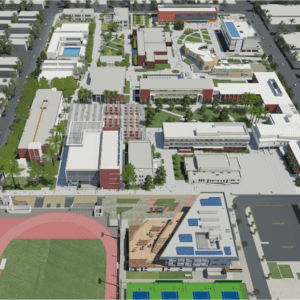
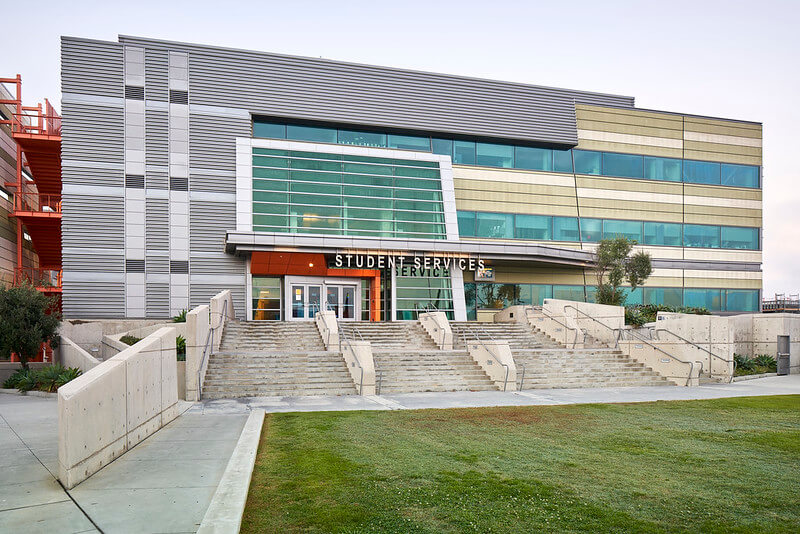
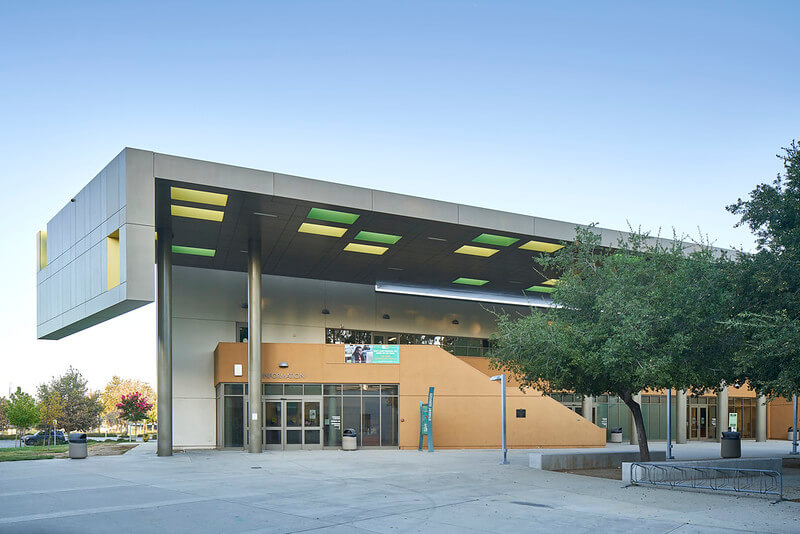
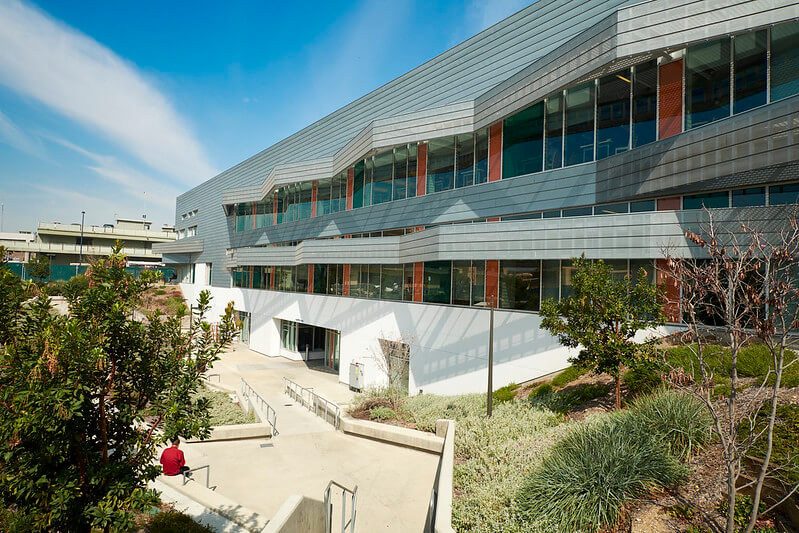
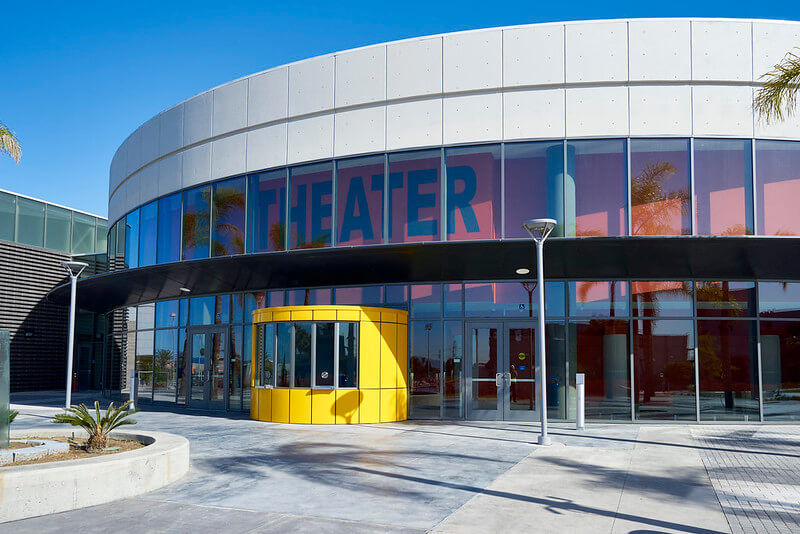
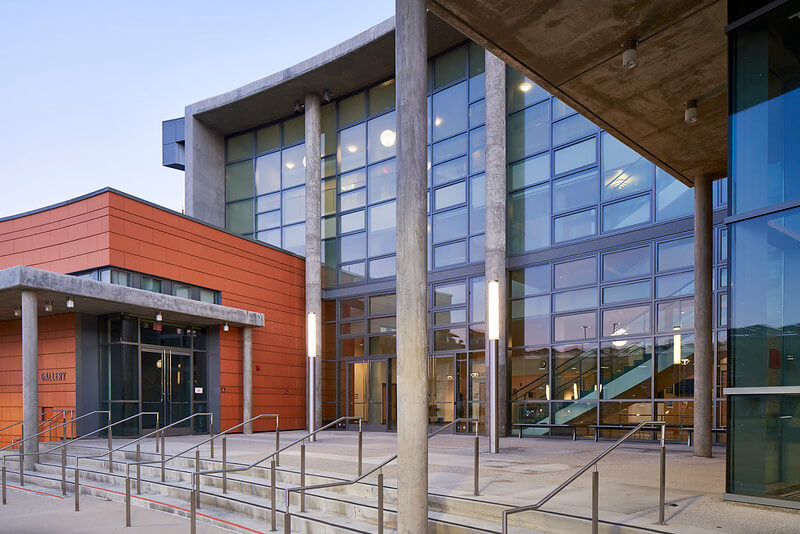
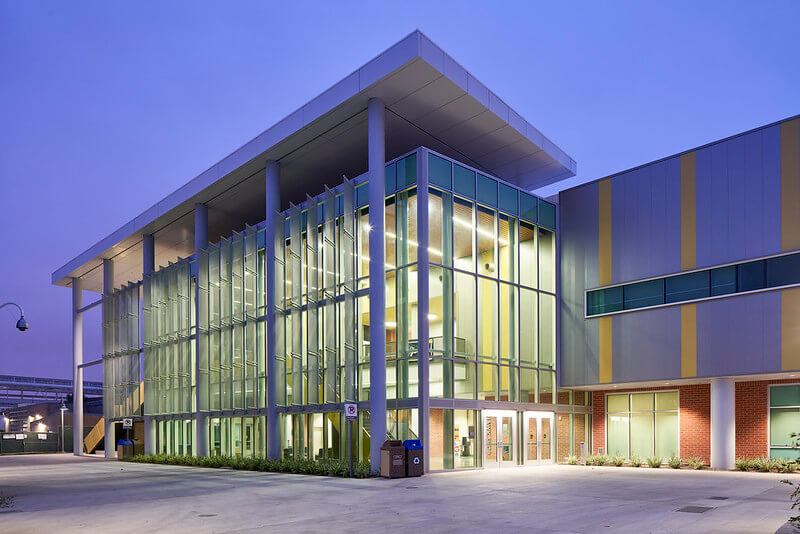
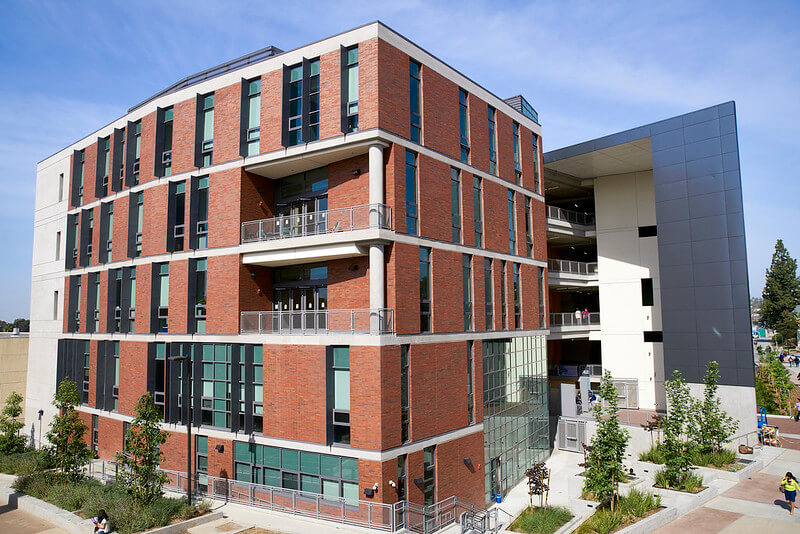
Los Angeles Harbor College’s shiny, two-story, $54 million Technology Instruction and Classroom Building sits on the eastern edge of the campus and the cutting edge of the classroom experience.
But its impact goes beyond facilities that include labs, more than 300 computers and learning tools like a state-of-the-art laser cutter.
And beyond the tech building's ability to serve students in electrical engineering, drafting, architecture, television and film, the media arts (Photoshop, digital editing, Web design) and business.
The impact of this edifice, constructed as part of the District's bond-funded Sustainable Building Program, can be seen in the mind set of students, according to Mark D. Wood, chairman of Harbor College’s humanities and fine arts department. And he should know. He’s in his 30th year at the college.
“They respond differently in these classrooms,” Wood said, “because they are in a computer environment. Our old classrooms were much like what they had in high school. They had chalkboards. They had desks. Now, when they walk into this building, they say, 'Oh, this is like a business environment. I am now a college student.’
The tech building, over a decade in the planning and construction phases, opened in January.
“All of our industries have changed so much digitally,” Wood said, “be it electronics, drafting or architecture. How we produce work is so different today than it was 10 years ago.
"In this building, we have things like hollow floors so that we can run wires underneath without rerunning conduit. We can reconfigure walls relatively easily."
A centerpiece of the new structure is the smart classroom. Complete with a smart podium.
“This classroom has an interactive communication center,” Wood said, “so that we can broadcast and/or receive from around the world. There is also a three-camera shoot station.”
The podium has connections to computers, the Internet, a video-projection system and a DVD player.
Hanging above are three large projection screens. One might be used to show a Web page, another a movie, the third a PowerPoint presentation, or perhaps be part of a teleconference hookup.
Though the building still has some traditional classrooms, in which teachers lecture and students take notes, digital technology is the facility's emphasis.
A prime example is the architecture department where drafting tables have given way to computer-aided drafting and the laser cutter.
“Now, it’s pretty much all on computer, although the drafting teachers still like the discipline of making the students learn to hand draft," Wood said, even though companies don't use hand drafting anymore.
“The only time you would need it [hand drafting] would be if you are drawing on a napkin,” Wood said.
“We want our students to have the newest skills," said Michael Song, chairman of the architecture department. “Before students were only making things from a virtual standpoint. Now, we have a wood shop and a laser cutter, enabling them to create physical prototypes.
“Before, we were always playing catch-up. Now, we are ahead of the curve. On an emotional and psychological level, the pride our students feel is pretty amazing.”
“We are constantly updated on the software,” said James Conway, a first-year architecture student. “Look at the laser cutter. Considering how much we pay for tuition, we are very fortunate to get to work with something like that.”
Luis M. Rosas, vice president of academic affairs at Harbor College, is impressed with the variety of classes offered in the new structure.
“It’s a great combination of programs,” he said, “that lead to innovation, technology and marketing all in one bundle. It’s a great concept.”
The tech building, like all those going up as part of the District's $6 billion Building Program, is energy efficient. It has “cool roof,” so named because of its white, reflective coating designed for low heat absorption. Glazed windows further reduce heat and low-flow devices increase water efficiency.
Asked what she liked about the new building, marketing major Marlo Hernandez said, “The restrooms and the air conditioning.”
Even in this high-tech age, some things don’t change.
“We have found,” Wood said, “the top complaints of students in any building concern the restrooms and the air conditioning.”